 Artifice
Drawing the map shelf
Notes on the battle map plates — real 5ft squares, terrain that means something mechanically, and why every map ships with a paragraph.
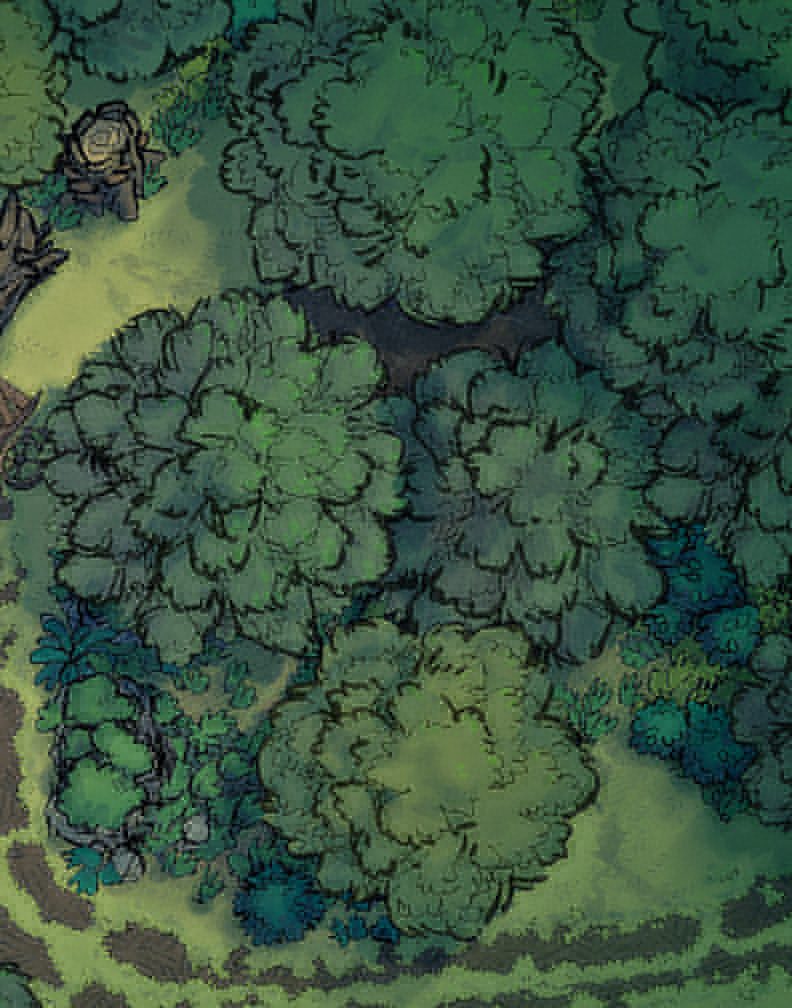
Every battle map in Artifice is drawn as a plate — numbered, gridded, and catalogued like an illustration out of a nineteenth-century pattern book. That is partly because we like how it looks. It is mostly because a map that is merely a pretty picture is useless to a rules engine.
The grid is not decoration
Each plate is drawn on a true 5ft square grid, and the grid is the map’s actual coordinate system rather than a texture laid over the top. This is the difference between a virtual tabletop and a shared image.
Because the squares are real, the engine can answer questions without anybody eyeballing them: whether the trunk gives you cover, whether the captain is within reach, whether that leap across the walkway is inside your movement or six inches past it. Every plate lists its dimensions on the card — 24 × 16, 28 × 18 — and those numbers mean exactly what they say.
Terrain that changes the fight
We draft each plate around a tactical question, and the answer should be legible before anyone rolls initiative.
Bandit Ambush is a felled trunk splitting a road, with cover on both flanks and a camp smoking to the east — a fight about whether you commit or withdraw. Hollow Road is a long approach with no cover at all, which makes it excellent for a chase and miserable for an archer. Treetops is three levels of walkway where, as the card says, falling is the real monster.
That last one taught us the most. Vertical maps break assumptions everywhere — line of sight, movement cost, what “adjacent” means when it can mean sixty feet straight down. Getting the canopy plates to resolve correctly forced elevation to be a first-class concept in the engine rather than a note the Dungeon Master tries to remember.
Why every plate ships with a paragraph
Each map carries a short piece of prose alongside its stats. It reads like flavour, and it does real work: it is the shared brief the Dungeon Master opens the scene from and you pick your ground from, so the fiction and the tactics start out pointed the same direction.
A map that only tells you where the walls are has told you half of it.
Bring your own
The shelf is a starting point, not the boundary. You can upload your own plate, set its grid so the squares read as 5ft, and the engine will measure across it exactly the way it measures ours — cover, reach, elevation and all.